Background
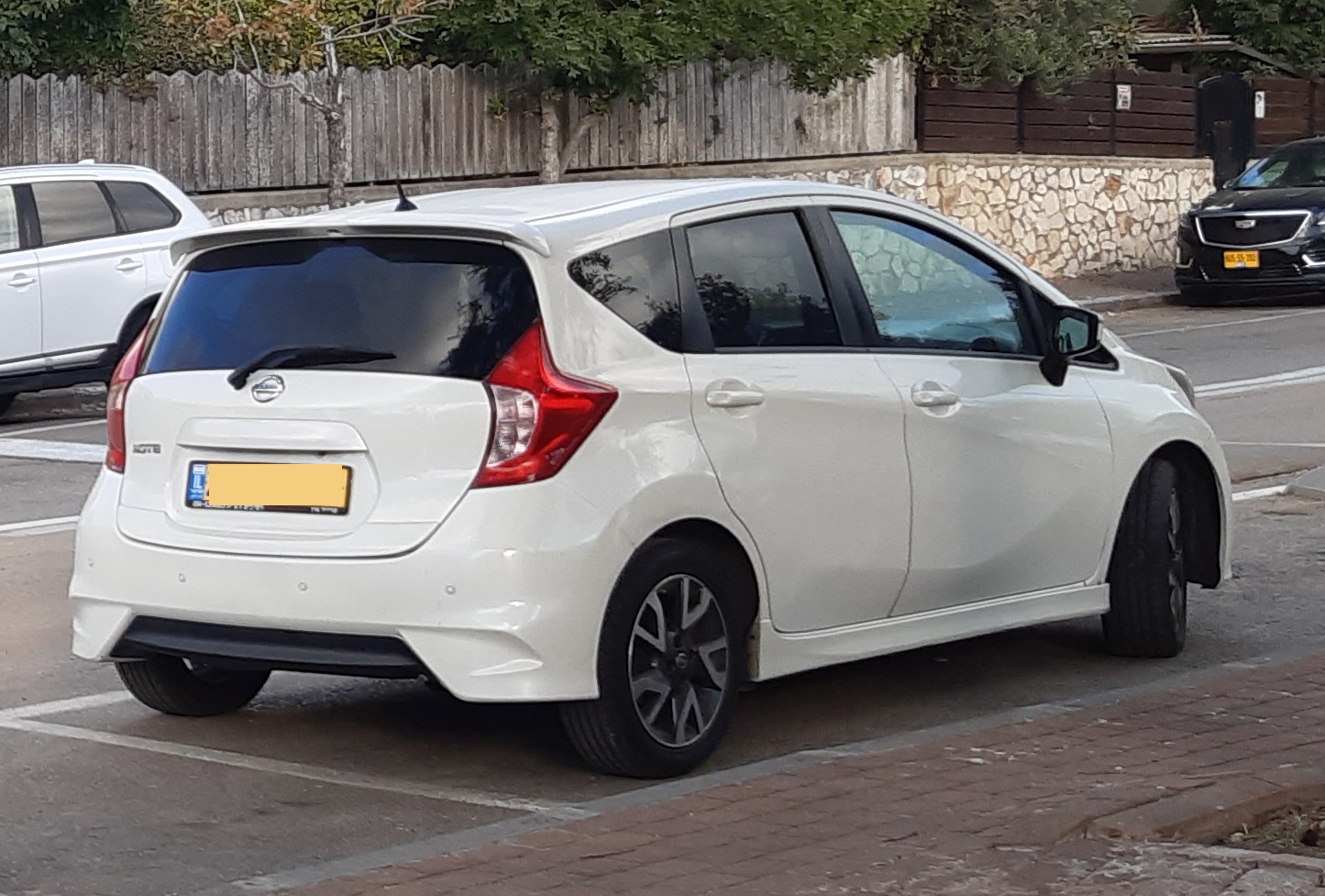
On September 19, 2025, I left home in one car (a 2012 Mazda 6 owned by my wife’s parents, which had served us for over 9 years and was low in radiation) and 8 hours later, I returned with a new used car. I bought a used Nissan Note after deciding that this model would suit our family’s needs as well as my needs as someone who is sensitive to radiation.
Before deciding on this model, I also tried to learn from it’s specs, that it is not likely to have any EMF-emitting devices or parts that might create high levels of EMF in the car.
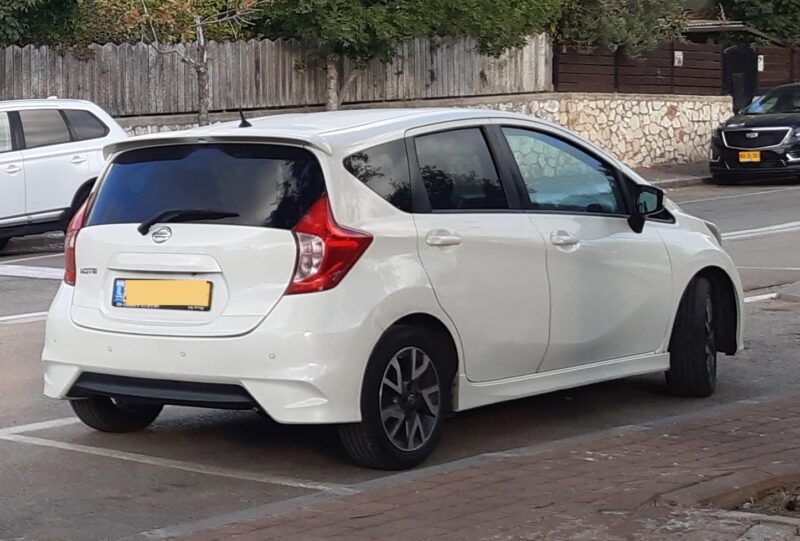
The first thing I did when I saw the car was perform my own radiation measurements to make sure there was no low-frequency (magnetic field) radiation and to assess whether it would be possible to turn off all transmissions inside the car. After checking the radiation, I began examining the car in other respects (mechanic, outside, and inside conditions). A few hours were enough to finish all the checks, and then I came back home with the new car (leaving the old car with the dealer as a trade-in).
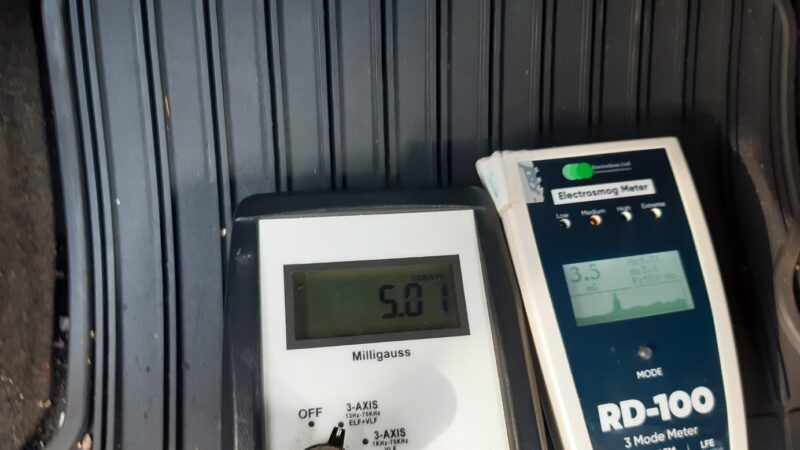
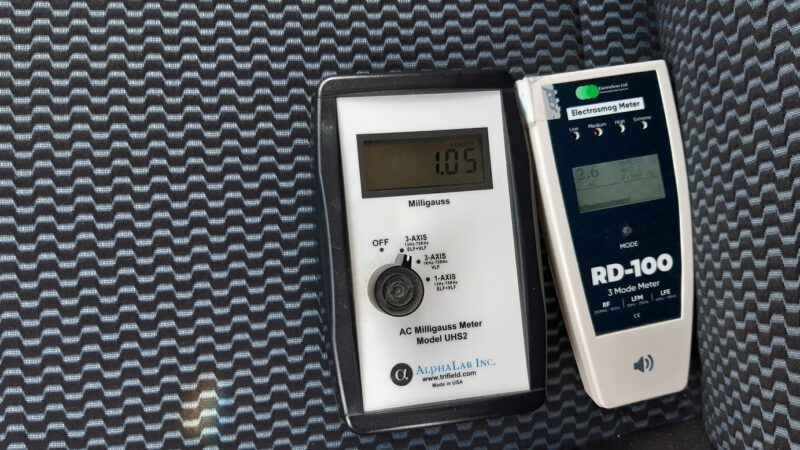
Now, two months after the purchase (as of November 20, 2025), I can make an interim summary and share what I’ve done to the car and my impressions from using and driving it. This is part of the mechanical alignment process, and part of converting it into a low-radiation vehicle suitable for someone who is radiation-sensitive like me. Overall, the process is progressing quite well and fairly quickly. The only thing preventing me from completing all the improvements is money. Therefore, I am still waiting to finish some of the changes and upgrades.
Removing Bluetooth Hands-Free & Disabling Transmissions
The car had two Bluetooth hands-free units installed — as if one wasn’t enough! One was a standalone system, the other was part of the audio-info-nav system.
On the day of the buy, I drove home with both of them active (and miraculously survived) , since I did not find a quick way to turn them off.
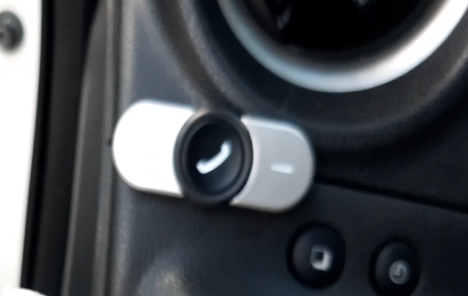
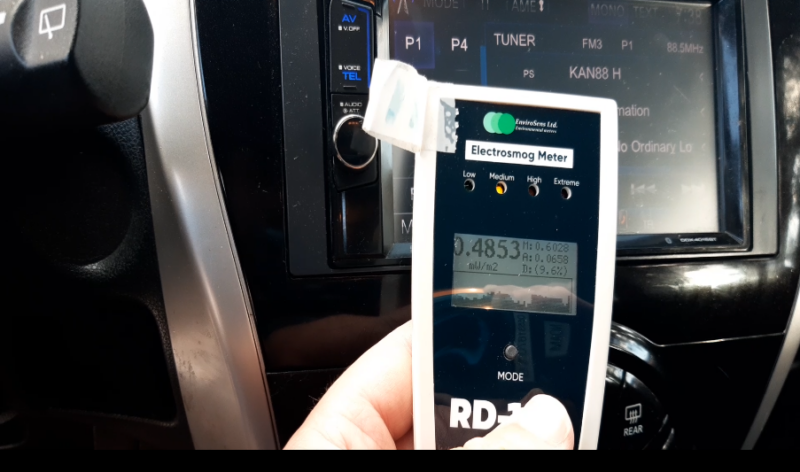
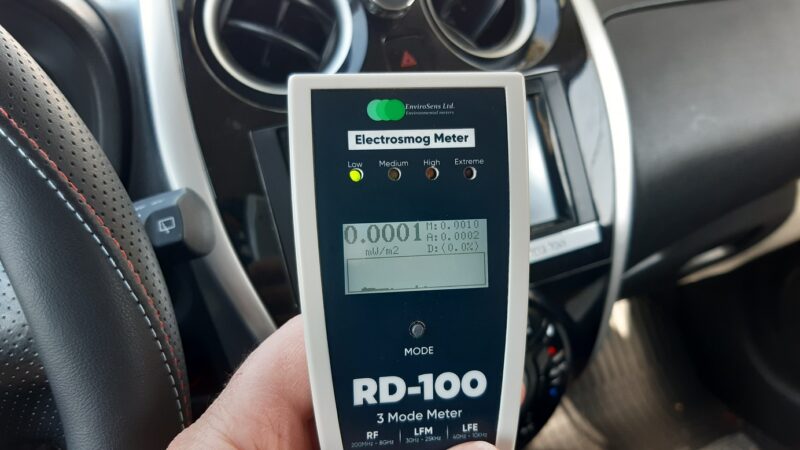
The next day after the purchase, I removed the standalone Bluetooth hands-free unit. It was transmitting inside the car. I also disabled all other transmissions from the vehicle’s audio-info-nav system. After checking with a fast home use radiation meter, I verified that there are no more transmissions in the cabin. The only system that still transmits briefly (right after ignition) is the tire pressure monitoring system, but I can’t measure its signal, suggesting it may be installed farther away (perhaps in the engine bay), so it doesn’t bother me.
Safety Systems – A Terrible Menace
What I can already say is that this is the first time I have driven a car with passive safety systems, and it’s simply awful. I don’t want to think about what would happen if the car had even more safety systems installed. My impression and experience is that these systems constantly warn and distract, take away my focus & desire to drive, and even interfere with driving.
When I received the car, I found it had the basic Mobileye system and also that the navigation system was always on (probably because the three previous owners didn’t know how to turn it off). It constantly notifies about speed limits, driving over the allowed speed (even 1 km/h over), speed cameras, traffic light cameras, and lots of other alerts. It was very, very annoying.
As a result, I had to drive very slowly and became a nuisance on the road, with other drivers constantly overtaking me. My reaction time increased, and I felt like I wasn’t in control of the driving. Therefore, I think that these systems are really dangerous, disruptive, and irritating. I’m a “super user” and know how to turn off and disable the systems and alerts … but most people (including those smarter than me) will continue to drive with the systems active and disruptive. As a fact, the car is over 10 years old, and all of its systems work and interfere without any of the previous drivers having tried to turn them off or change the settings to make them less intrusive.
After a few days, I learned how to turn off the navigation system so it wouldn’t activate with every trip, and adjusted its settings so it would bother me less when I chose to use it. A few days after that, I installed a kill switch for the Mobileye system. Then there was silence in the car. Finally, it’s possible to drive without interruptions, distractions, and alerts.
Stop-and-Go — Disruptive and Troubling
The next system that bothered me was the Stop-and-Go system, which shuts off the engine every time the car stops for more than a few seconds. This is especially annoying because it also stops the air conditioning (it stops working when the engine shuts off). Also, restarting the engine takes a second — sometimes that one second is needed when you want to accelerate again, especially on the busy and tense roads of Israel.
You can disable Stop-and-Go in a few ways:
- Re-program the car’s computer — expensive.
- Purchase an electronic component that connects to the disable button and sets the default state to OFF every time the car starts (about ~$120 on AliExpress). I haven’t found a compatible unit for the Note yet — I found options for other Nissan cars, but I’m not sure they work 100 % with my Note.
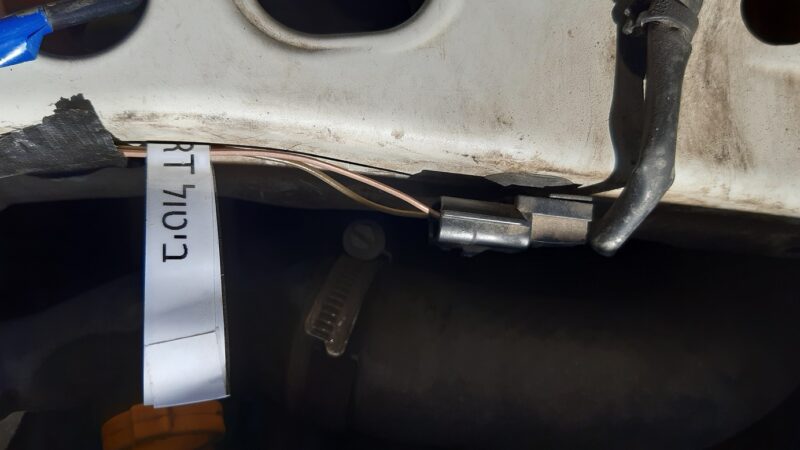
- Short-circuit a micro-switch in the engine bay — this makes the car think the hood is open and disables the Stop-and-Go system. I chose this free solution because the system really bothered me.
Acoustics and Speakers
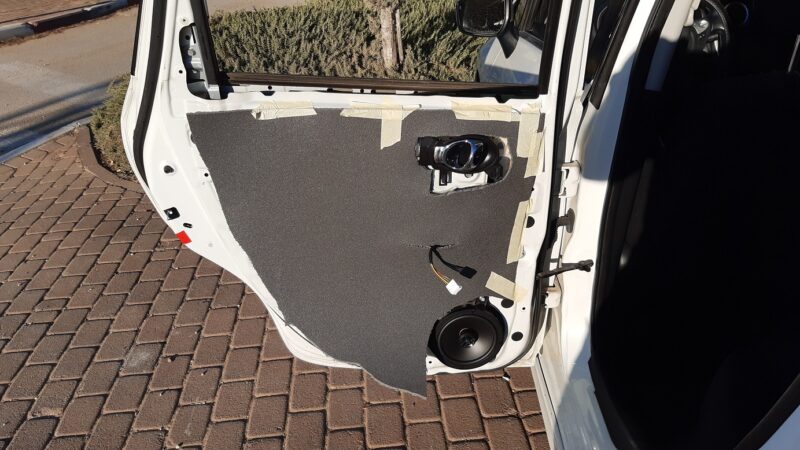
I also installed some acoustic insulation in parts of the car using a cheap material under the interior plastic panels. The improvement was significant: less road noise and better sound quality.
Regarding audio quality, I replaced the original speakers with new RAINBOW ones. Because I’m sensitive to radiation, I prefer not to install external amplifiers or subwoofers — so upgrading the existing speakers was important.
Mechanical Work & Maintenance
Slowly, I am completing the mechanical alignment at the garage: flushing fluids, changing the engine oil and filter, and partial AC repairs (to be completed when I have time and money).
In the future, I will also replace the transmission oil, install new tires (better ones), and perform timing belt service— all relatively expensive.
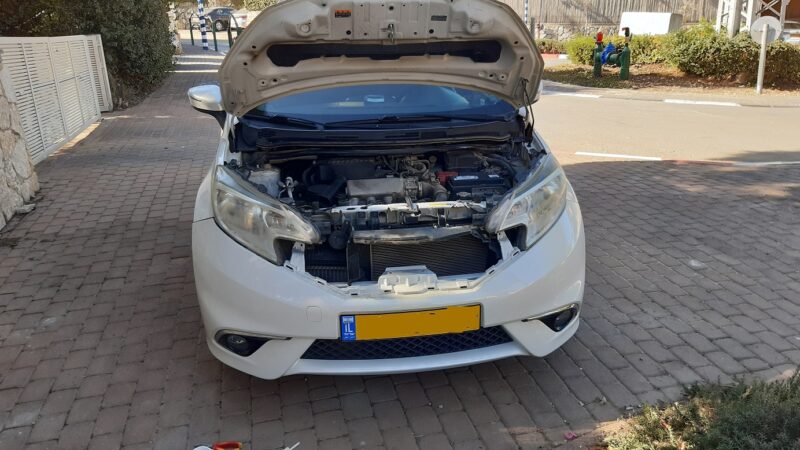
I also removed and reinstalled the front bumper and plastic parts myself, which fixed annoying rattles that occurred when parts were not connected properly.
Other Small Modifications
I made additional small improvements, like replacing the steering wheel cover, doing a deep interior cleaning, adding a purifying air fragrance, installing a center armrest, and adding an OBD2 display to show vital engine data (e.g., coolant and oil temperature) while driving — data that the factory gauge cluster does not show.
I also installed a grounding strap to reduce static electric fields on the car, replaced wipers, added a fuel additive, upgraded the rearview mirror, and more.
Experience & Interim Summary
The car proves itself as a low-radiation vehicle. I drive it and don’t feel unwell. Gradually, I’m increasing how far I drive it, and my confidence in the car is growing both mechanically and in terms of radiation exposure.
Regarding the requirements I set before purchase, the car has proven successful:
- Higher seating position
- Smaller, lighter car with good city driving dynamics
- Excellent outward visibility (much better than the Mazda 6)
- Spacious interior (larger than a Nissan Micra and similar to the Mazda 6)
- Good build quality
- Improving fuel consumption (about ~1 liter to ~11 km in city driving with many hills and short trips)
Summary
The car is not perfect — it’s used and had three previous owners, and probably none cared for it like I do — but it’s becoming perfect for me and my family (at least that’s the hope).
Most importantly, the car is low in radiation, while driving it I do not feel pain or fatigue due to radiation. It doesn’t have a smart key, and the Bluetooth or WIFI has been turned OFF or removed, and other transmissions have been disabled. In terms of low-frequency magnetic fields, it’s a normal gasoline car with low radiation levels.
The strongest impression from recent days is how bad and distracting these safety systems are, and how many RF-emitting systems people install in their cars.